Asphalt Nation: The Hidden Acreage America Paved Over for Cars That Aren't There
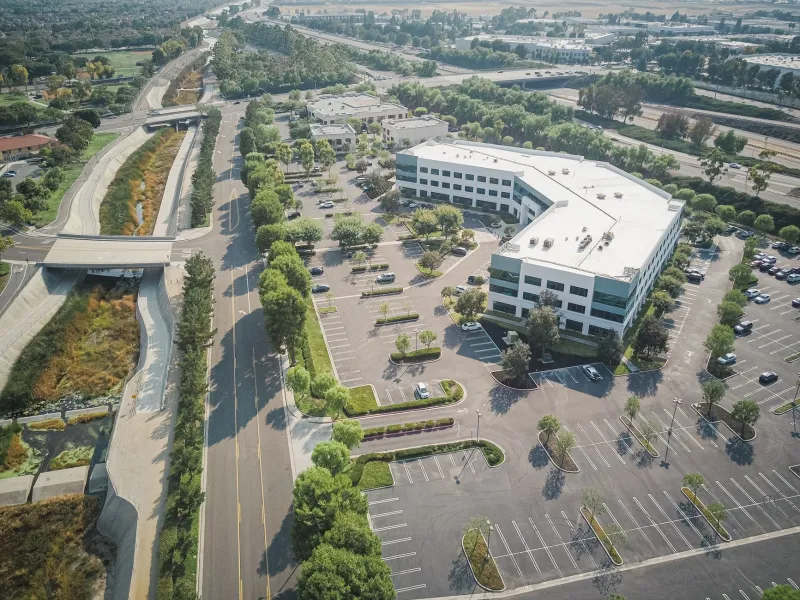
Somewhere in an American suburb right now, a parking space sits empty. It has a painted border, a drainage grade, a layer of sealant applied every few years. It costs money to maintain and generates nothing. Multiply that space by roughly two billion, and you begin to grasp the scale of a land-use habit so ordinary that most Americans have never thought to question it.
A Country Built for the Parked Car
Estimates of the national parking supply vary, but even conservative figures land in the hundreds of billions of square feet. Los Angeles County alone dedicates an estimated 14 million spaces — more than three per registered vehicle. In many midsize American cities, parking occupies a larger share of downtown land than housing, commerce, and green space combined.
The reason is bureaucratic as much as cultural. For decades, municipal zoning codes have required developers to build a minimum number of spaces per apartment, per restaurant seat, per thousand square feet of retail. These mandates, imported wholesale from a postwar planning playbook, assumed a future of universal car ownership that has never quite arrived — and they made car-free and car-light living illegal to build in most of the country.
The Runoff Problem Nobody Sees
A parking lot is an impervious scar on a watershed. Rain that once soaked into soil now sheets across asphalt, collecting oil drippings, tire particles, heavy metals, and de-icing chemicals before funneling directly into the nearest stream. The Environmental Protection Agency identifies urban runoff as one of the leading threats to water quality in American rivers and coastal waters, and parking surfaces are among its largest contributors.
The hydrology compounds downstream. When a watershed loses its absorbent ground, storm surges that once dispersed now concentrate. Cities from Houston to Cedar Rapids have learned that every additional acre of pavement is a promise that floodwaters will arrive faster, higher, and dirtier than before.
Heat Islands, Painted White
Parked in the sun, an asphalt lot can exceed 140 degrees Fahrenheit on a summer afternoon. That stored heat radiates back into surrounding neighborhoods well after dark, driving up cooling costs and pushing nighttime temperatures into the danger zone during heat waves — the deadliest form of extreme weather in the United States.
Researchers have mapped the correlation with uncomfortable precision: neighborhoods with the most surface parking are, on average, the hottest, the poorest, and the least shaded. The parking lot is not just a symptom of car dependency. It is an active engine of climate inequity.
The Great Unpaving Has Begun
The encouraging news is that a correction is underway, and it is happening city by city, code by code.
- Minneapolis and Buffalo eliminated parking minimums entirely, letting developers decide how much parking a project actually needs. The result: more housing, not more congestion.
- Los Angeles has piloted programs converting redundant lots into pocket parks and small businesses.
- Solar canopies are turning sun-baked lots into power plants, with panels shading vehicles while feeding the grid — a rare instance of parking paying its own way.
- Permeable pavement and bioswales are retrofitting older lots to absorb stormwater instead of shedding it.
Each intervention chips away at the same underlying premise: that storing an empty car deserves prime urban land.
What a Post-Parking America Looks Like
Imagine redirecting even a fraction of that paved acreage. Housing economists have long noted that structured and surface parking inflates rents by thousands of dollars per unit. Every stall removed from a zoning requirement is a stall that can become apartments, trees, cafés, or simply ground that breathes.
None of this means cars vanish. It means the default assumption does. For seventy years, American land use treated free parking as a birthright and priced the consequences into flood insurance premiums, emergency room visits, and utility bills. The spaces were never really free. We are only now receiving the invoice — and discovering that the land beneath them was worth more than anything we ever parked on it.