From Grass to Garden: The Suburban Rewilding Revolution Taking Root Across America
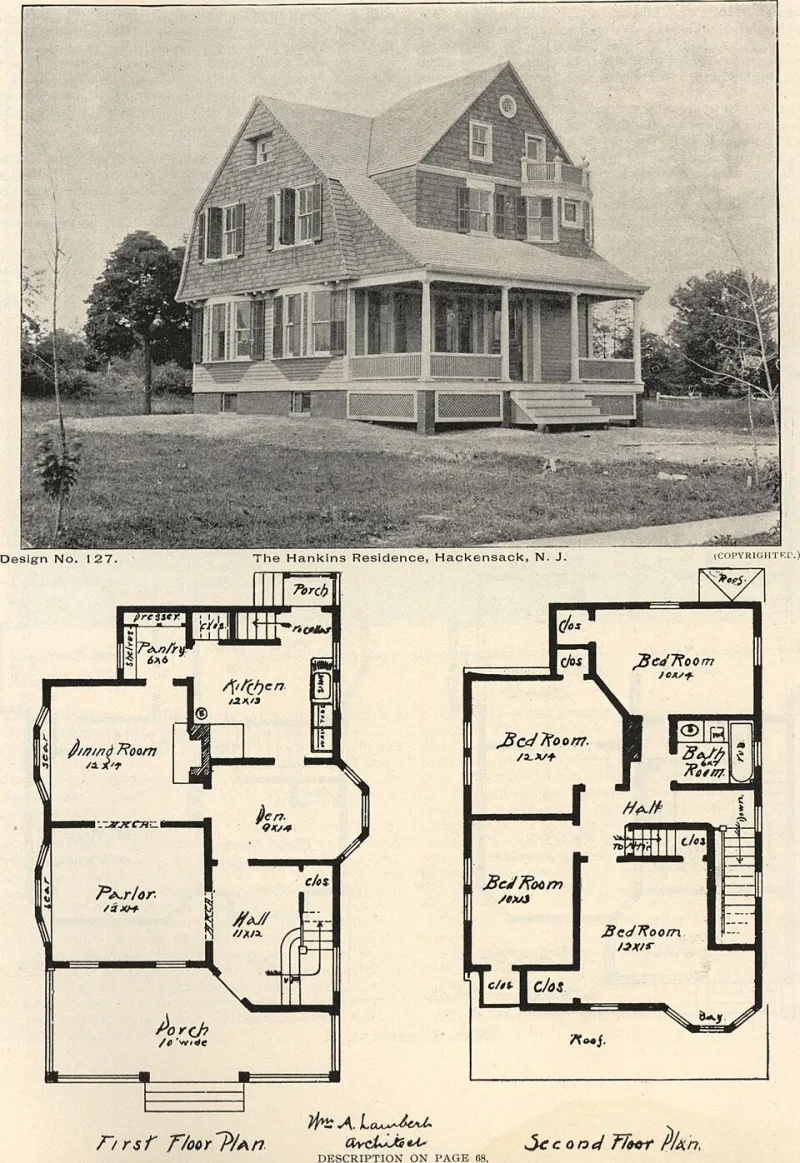
Photo: Wm A. Lambert, No restrictions, via Wikimedia Commons
For most of the twentieth century, the American lawn was an unquestioned cultural institution — a uniform green carpet signaling respectability, neighborliness, and the quiet prosperity of the middle class. Maintaining it required mowers, sprinklers, fertilizers, and herbicides, all deployed in service of a monoculture that supported almost no wildlife and demanded enormous resources. Collectively, American lawns cover an estimated 40 million acres, making turfgrass the single most irrigated crop in the country.
That consensus is fracturing, and in its place something considerably more interesting is growing.
Across suburban neighborhoods from the Pacific Northwest to the Mid-Atlantic, homeowners are ripping out their Kentucky bluegrass and replacing it with landscapes that look, at first glance, almost wild. Native coneflowers and black-eyed Susans bloom alongside ornamental grasses. Rain gardens collect stormwater in shallow depressions planted with sedges and cardinal flowers. Monarch waystation gardens string together migration corridors through neighborhoods that once offered butterflies nothing but chemical-treated turf. The movement has acquired a name — suburban rewilding — and it is gathering momentum that extends well beyond garden enthusiasts.
Why the Conventional Lawn Has Become Ecologically Indefensible
The environmental case against the traditional American lawn is not subtle. Turfgrass monocultures support a fraction of the insect species that native plant communities sustain, and insects form the foundation of virtually every terrestrial food web. The University of Delaware's Doug Tallamy, whose research on the relationship between native plants and wildlife has become something of a foundational text for the rewilding movement, has documented that a single native oak tree supports hundreds of caterpillar species — the primary food source for most North American songbirds during nesting season. A lawn of non-native turfgrass supports almost none.
The resource demands compound the ecological damage. Lawn irrigation accounts for nearly one-third of all residential water use in the United States, totaling approximately nine billion gallons per day during summer months. Conventional lawn care relies heavily on synthetic nitrogen fertilizers, a significant portion of which runs off into streams, rivers, and ultimately coastal waters, contributing to the algal blooms and oxygen-depleted dead zones that have devastated fisheries from the Chesapeake Bay to the Gulf of Mexico.
Gas-powered lawn equipment adds its own burden. The EPA estimates that operating a conventional gasoline mower for one hour produces the same hydrocarbon emissions as driving a car approximately 45 miles. Scaled across 40 million acres of managed turf, the numbers become staggering.
What Rewilding Actually Looks Like in Practice
For homeowners approaching this transition, the practical reality is more accessible — and more flexible — than the term "rewilding" might suggest. Full lawn conversion is one option, but many participants in the movement begin with incremental steps: replacing a strip of lawn along a fence line with native perennials, installing a rain garden in a low-lying area where water pools after storms, or simply ceasing herbicide applications and allowing native plants to colonize naturally.
In Takoma Park, Maryland, a community just outside Washington, D.C., that has become something of a showcase for suburban ecological restoration, residents have converted front yards into certified wildlife habitats recognized by the National Wildlife Federation. The neighborhood's tree canopy has thickened, stormwater runoff has measurably decreased, and longtime residents report seeing fireflies, native bees, and bird species that had been absent for years.
In the Chicago suburbs, the North Branch Restoration Project has spent decades working with homeowners and park districts to restore remnant prairie and savanna ecosystems using locally sourced native seed. The results demonstrate that restoration at the neighborhood scale, when sustained over years, can produce genuine ecological function — not merely the appearance of naturalness.
Similar stories are emerging in Phoenix, where desert-adapted native plants are replacing water-intensive turf in a region facing acute water scarcity; in suburban Atlanta, where homeowners are creating riparian buffers along creek corridors to reduce erosion and filter agricultural runoff; and in the Pacific Northwest, where native plant gardens are being designed specifically to support declining populations of native bees.
Navigating HOAs, Local Ordinances, and Cultural Resistance
The movement's growth has not been frictionless. Homeowners' associations in many suburban communities maintain aesthetic standards that effectively prohibit natural landscaping, and local ordinances in some municipalities still classify native plantings above a certain height as code violations — legal holdovers from weed-abatement rules written with entirely different purposes in mind.
Advocates have been methodically challenging these restrictions, and the legal landscape is shifting. Florida enacted the Florida-Friendly Landscaping Act, which prohibits local governments and HOAs from banning landscapes that conserve water and reduce chemical inputs. Several other states have passed or are considering similar protections. The argument, increasingly accepted by courts, is that restrictions on ecologically beneficial landscaping are difficult to justify on public interest grounds when the alternative — chemically maintained monoculture turf — carries documented environmental costs.
Cultural resistance remains a real factor, particularly in communities where lawn maintenance is bound up with social norms around property upkeep. Practitioners of suburban rewilding have learned that design matters enormously in navigating neighborhood dynamics. A front yard that incorporates clear structure — defined edges, visible intentionality, perhaps a small interpretive sign identifying plants and their ecological function — is received very differently than one that reads as neglect. The aesthetic language of the movement has evolved accordingly, with designers increasingly skilled at creating native plant gardens that are both ecologically rich and visually coherent.
Biodiversity, Water, and the Bigger Picture
The cumulative potential of suburban rewilding at scale is not trivial. Research published in the journal Biological Conservation estimated that converting even a modest percentage of American lawn area to native plant habitat could create a network of ecological corridors substantial enough to meaningfully support at-risk pollinator populations. Given that wild bees pollinate an estimated $3 billion worth of American agricultural crops annually, the economic argument for pollinator habitat is as compelling as the ecological one.
Water conservation benefits are similarly significant. Native plant communities, once established, typically require little to no supplemental irrigation because they are adapted to local precipitation patterns. Studies in water-stressed regions like the Southwest have documented reductions in residential outdoor water use of 50 to 75 percent following lawn-to-native conversions — reductions that carry real weight in municipalities already managing scarcity.
Perhaps most importantly, suburban rewilding reconnects residents to ecological processes that industrial landscaping has long obscured. A yard that supports monarchs, hosts nesting native bees, and fills with the sound of birds in spring is a yard whose owner understands, in a visceral and immediate way, why these systems matter — and why their protection is worth fighting for at scales far beyond the property line.
The American lawn was always a choice, not an inevitability. The growing number of homeowners making a different choice are demonstrating, one garden at a time, that the alternative is not just greener but genuinely alive.