Wired for the Future: Why Modernizing America's Electrical Grid Is the Climate Fight's Most Urgent Battleground
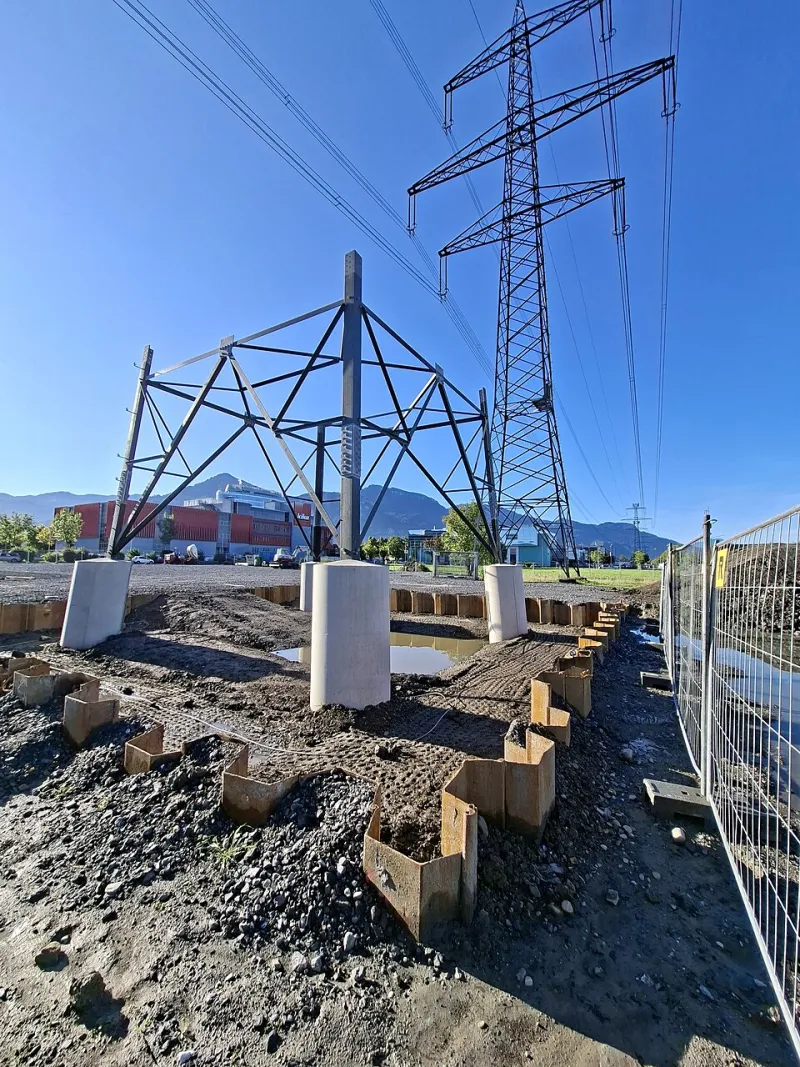
Photo: Asurnipal, CC BY-SA 4.0, via Wikimedia Commons
On a sweltering August afternoon in 2023, tens of thousands of Texas residents watched their thermostats climb as rolling conservation alerts swept across the ERCOT grid. It was not a shortage of wind or solar energy that threatened the system—it was the infrastructure meant to deliver it. Transmission bottlenecks, aging substations, and software systems designed for a world of centralized coal plants conspired to make an abundance of renewable generation feel, momentarily, like scarcity.
That episode encapsulates a paradox at the heart of American energy policy: the country is building clean energy faster than at any point in its history, yet the network meant to carry that electricity to homes, schools, and factories was largely designed in the 1960s and 1970s. The gap between generation ambition and grid reality is not merely an engineering inconvenience. It is a climate liability of the first order.
A Grid Built for Another Century
The United States operates three major interconnections—the Eastern, Western, and Texas grids—comprising roughly 600,000 miles of high-voltage transmission lines, 55,000 substations, and millions of distribution transformers. The American Society of Civil Engineers has repeatedly awarded this system a grade of D+ in its infrastructure report cards, citing chronic underinvestment and deferred maintenance.
Historically, this infrastructure was engineered around a simple, predictable model: large thermal power plants—coal, natural gas, nuclear—generate electricity in one direction, from centralized stations to passive consumers. Renewable energy shatters that model entirely. Solar panels on suburban rooftops in Phoenix feed electricity back into distribution lines. Offshore wind arrays off the Virginia coast inject power into transmission corridors that were never designed to handle bidirectional flow. Battery storage systems charge and discharge in response to price signals, adding yet another variable the original engineers never anticipated.
"The grid is essentially running software from the mainframe era on hardware that's approaching retirement age," says Erin Castillo, a transmission systems engineer who has consulted for utilities across the Midwest. "We're asking it to do things it was never architected to do, and the stress is showing."
The Cost of Inaction
Blackouts are the most visible symptom of grid fragility, but they are far from the only one. Interconnection queues—the bureaucratic waiting lists that renewable energy developers must navigate before connecting new projects to the grid—have ballooned to historic proportions. As of late 2024, more than 2,600 gigawatts of proposed clean energy capacity sat in interconnection queues across the country, according to Lawrence Berkeley National Laboratory. To put that figure in context, the entire installed generating capacity of the United States is approximately 1,200 gigawatts.
Most of those queued projects will never be built—not because the technology is unavailable or the economics are unfavorable, but because the grid cannot accommodate them without costly and time-consuming upgrades. Developers routinely wait five to seven years for interconnection approvals, only to receive cost estimates that make their projects financially unviable. The result is what grid modernization advocates call "emissions lock-in": fossil fuel plants that should be retiring continue to operate because there is no transmission pathway to replace them.
The economic consequences compound over time. Each year of delay means more carbon dioxide accumulates in the atmosphere, more communities remain exposed to the price volatility of natural gas markets, and more investment capital migrates to countries with more hospitable grid conditions.
Utilities Leading the Charge
Not every utility is standing still. Duke Energy, which serves the Carolinas and parts of the Midwest, has committed more than $65 billion over a decade to grid modernization, including advanced transmission switching equipment, grid-scale battery installations, and automated fault detection systems that can isolate outages in seconds rather than hours. The company's experience integrating utility-scale solar across the Carolinas offers a template for what coordinated investment can achieve.
In the Pacific Northwest, the Bonneville Power Administration has been piloting dynamic line rating technology—sensors that continuously measure the actual thermal capacity of transmission lines rather than relying on conservative static estimates. Early results suggest the technology can increase the effective capacity of existing lines by 10 to 40 percent without laying a single mile of new cable. "It's not glamorous," admits one BPA transmission planner, "but it's the kind of unglamorous work that actually moves the needle."
Midwest grid operator MISO has taken a regional approach, launching a long-range transmission planning initiative that identified a portfolio of projects capable of unlocking 224 gigawatts of new renewable capacity across 15 states. The initiative explicitly frames transmission investment as a climate strategy, not merely an engineering exercise.
The Policy Architecture
Federal policy has begun to catch up with the urgency. The Inflation Reduction Act and the Infrastructure Investment and Jobs Act together directed more than $20 billion toward grid modernization, including funding for long-distance high-voltage direct current transmission, smart grid technologies, and workforce development. The Federal Energy Regulatory Commission finalized Order 1920 in 2024, requiring transmission providers to conduct long-term regional planning that explicitly accounts for the anticipated growth of renewable energy.
Yet advocates argue these measures, while significant, remain insufficient to the scale of the challenge. The United States needs to build or upgrade roughly 100,000 miles of high-voltage transmission by 2035 to meet its climate commitments, according to a Princeton University Net-Zero America study. Current permitting timelines and regulatory fragmentation across state and federal jurisdictions make that pace extraordinarily difficult to achieve.
Permitting reform has emerged as a rare area of bipartisan interest in Washington. Both the Biden and Trump administrations, despite their divergent views on climate policy broadly, have acknowledged that the years-long permitting gauntlet facing transmission projects represents a genuine obstacle to energy development of all kinds.
An Opportunity Hiding in Plain Sight
For all the complexity, grid modernization represents one of the most straightforward climate investments available to policymakers and investors alike. Unlike carbon capture technologies that remain unproven at scale, or hydrogen supply chains that require entirely new industrial infrastructure, transmission upgrades build on systems that already exist. The engineering is understood. The economic returns—in the form of lower consumer electricity bills, avoided blackout costs, and accelerated renewable deployment—are measurable.
Rural communities stand to benefit disproportionately. Many of the nation's best wind and solar resources sit in sparsely populated areas of the Great Plains, the desert Southwest, and Appalachia—regions that have historically been left behind by energy economics. New transmission infrastructure connecting these resources to population centers would generate construction jobs, lease payments for landowners, and tax revenues for counties that have long depended on declining extractive industries.
The invisible grid, in other words, need not remain invisible. Making it legible—to policymakers, investors, and the public—may be the first and most important step toward building the infrastructure that America's clean energy future demands. The renewable revolution has already begun. Whether it succeeds at the scale the climate requires depends, in no small measure, on the wires we choose to build today.