Shipped at What Speed? The Environmental Reckoning Behind America's Delivery Addiction
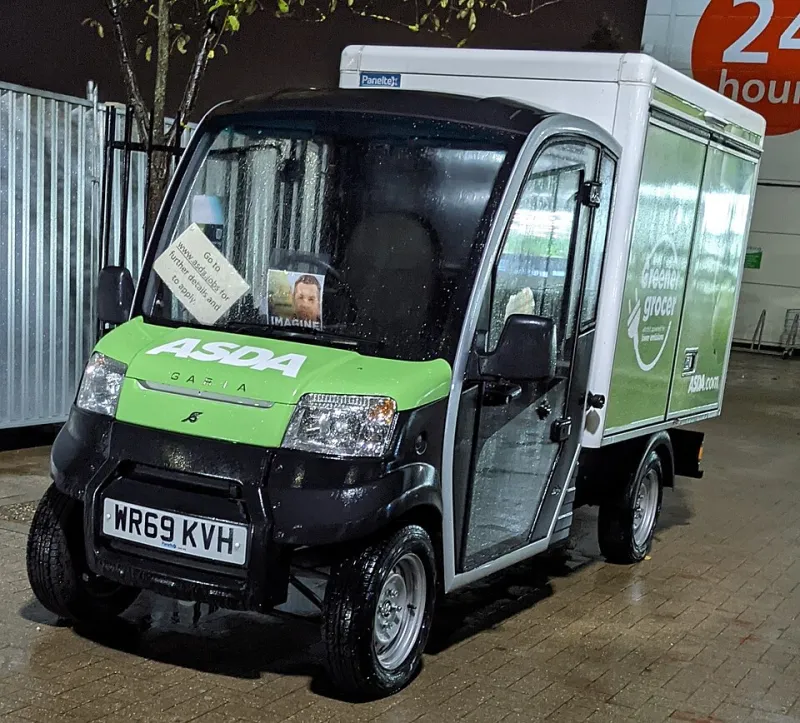
Photo: Calreyn88, CC BY-SA 4.0, via Wikimedia Commons
There is something almost magical about the modern delivery experience. You select an item in the evening, and by the following morning it materializes at your front door, as though the supply chain were simply an extension of your own hand. What that experience conceals is a vast, energy-intensive infrastructure operating at extraordinary velocity — and at a mounting cost to the atmosphere.
America's e-commerce sector now accounts for roughly 15 percent of all retail sales and is still growing. The fulfillment networks that make rapid delivery possible have expanded accordingly, reshaping not just how goods move, but where warehouses are built, how many vehicles crowd urban streets, and how much electricity the entire system consumes. The environmental ledger for all of this is substantially larger than most consumers realize.
The Fulfillment Center Footprint
Before a package ever reaches a delivery van, it has already accumulated a meaningful carbon burden inside the warehouse where it was stored. Modern fulfillment centers are enormous — some exceed one million square feet — and they operate around the clock. Lighting, climate control, conveyor systems, robotics, and the constant movement of human workers all demand significant energy. According to estimates from the Urban Land Institute, large-scale distribution facilities can consume between 25 and 50 kilowatt-hours of electricity per square foot annually, a figure that climbs further when refrigeration is involved.
The geographic placement of these facilities compounds the problem. To satisfy same-day and next-day delivery windows, companies have pushed warehouses closer to dense population centers — often into communities that already bear disproportionate pollution burdens. The trade-off is faster transit times, but it comes with increased truck traffic, higher local emissions, and land use patterns that prioritize logistics over green space or housing.
Why Speed Is the Emissions Multiplier
The relationship between delivery speed and carbon emissions is not linear — it is exponential in its inefficiencies. A standard ground shipment traveling across a regional distribution network allows carriers to consolidate packages into full truckloads moving along optimized routes. The math is relatively favorable: many packages, one vehicle, one journey.
Same-day and next-day delivery dismantle that logic entirely. To meet aggressive timelines, carriers frequently dispatch vehicles that are only partially loaded. A van that might carry forty packages on a well-planned route instead departs with fifteen because the window for consolidation has closed. The result is a dramatic increase in what logistics analysts call the "empty mile" problem — vehicles burning fuel and emitting carbon while moving less freight than they were designed to carry.
Air freight, which powers a significant share of expedited deliveries, is even more carbon-intensive. Per ton-mile, air transport generates roughly forty-seven times the greenhouse gas emissions of ground shipping. When consumers select overnight delivery without considering whether their purchase genuinely requires it, they are often unknowingly triggering an air freight movement that a two-day ground shipment would have entirely avoided.
The Last Mile: Where Emissions Concentrate
Logistics professionals have long identified the "last mile" — the final leg of a journey from regional depot to individual doorstep — as both the most expensive and the most emissions-intensive segment of the delivery chain. In dense urban environments, delivery drivers navigate stop-and-go traffic, struggle to find legal parking, and sometimes idle for extended periods. Each of these conditions erodes fuel efficiency and increases per-package emissions.
The proliferation of individual residential deliveries, driven by e-commerce growth, has also increased what researchers call "delivery density" problems in suburban areas. Unlike urban cores where multiple deliveries may occur on a single block, suburban routes often require a van to travel several miles between stops. Studies from MIT's Center for Transportation and Logistics have found that in low-density suburban settings, per-package emissions from last-mile delivery can be three to four times higher than in urban environments.
Electrification of delivery fleets offers a meaningful path forward. Amazon has committed to deploying 100,000 electric delivery vehicles by 2030, and UPS and FedEx have made similar pledges. But electrification alone does not resolve the inefficiency of under-loaded vehicles or the emissions generated by the electricity grid itself, particularly in states still heavily dependent on fossil fuels for power generation.
The Packaging Problem Nobody Talks About
The vehicle emissions story is only part of the picture. Packaging materials — cardboard boxes, plastic air pillows, foam inserts, and tape — represent a substantial embedded carbon cost that arrives at your door and then requires disposal. The US generates approximately 80 million tons of packaging waste annually, a figure that has risen sharply with e-commerce growth.
The drive for speed makes packaging waste worse, not better. Expedited shipments are frequently sent in individual boxes rather than consolidated into larger shipments, and the time pressure of rapid fulfillment discourages the kind of right-sizing optimization that reduces material use. A single oversized box containing one small item, dispatched in its own dedicated van trip, is an emblem of the broader inefficiency the speed economy creates.
What Sustainable Delivery Actually Looks Like
None of this suggests that online shopping is inherently incompatible with climate responsibility. The emissions profile of e-commerce, when managed thoughtfully, can actually compare favorably with traditional retail — particularly when it displaces multiple individual car trips to physical stores. The key variables are consolidation, vehicle efficiency, and the willingness of consumers to prioritize those factors over speed.
Several practical shifts can make a meaningful difference. Choosing standard shipping over expedited options whenever a purchase is not genuinely time-sensitive allows carriers to consolidate shipments and optimize routes. Grouping multiple purchases into a single order, rather than placing several small orders across a week, reduces the number of discrete shipments generated. Some retailers now offer incentives — store credit, discounts, charitable donations — for customers who select slower delivery windows, a model that aligns consumer behavior with lower-emission logistics.
At the infrastructure level, the expansion of consolidated pickup points — lockers in grocery stores, pharmacies, and transit hubs — represents one of the most promising structural solutions. When multiple packages destined for the same neighborhood are held at a single location rather than delivered to individual addresses, last-mile emissions drop substantially. Adoption in the US has lagged behind Europe, where pickup lockers are a routine feature of urban retail, but the model is gaining traction.
Cities and states also have a role to play. Zoning policies that encourage mixed-use development and reduce delivery distances, low-emission delivery zones that incentivize electric vehicles in urban cores, and congestion pricing that reflects the true cost of delivery traffic are all tools that progressive municipalities are beginning to deploy.
The Checkout Moment
For individual consumers, the most immediate point of leverage remains the checkout screen. The shipping options presented there are not neutral — they carry real environmental consequences that the standard interface renders invisible. A growing number of sustainability advocates and researchers argue that carriers and retailers should be required to display estimated carbon emissions alongside delivery options, giving consumers the information they need to make genuinely informed choices.
Until that transparency becomes standard, the responsibility falls to consumers willing to examine their own habits. Convenience is not the enemy of sustainability. But the version of convenience that demands a package in eighteen hours, dispatched in a half-empty van, flown across a time zone on a cargo jet, and wrapped in three layers of single-use plastic, is one that the planet is increasingly unable to afford. A slightly slower, more consolidated version of that same convenience turns out to be available — and, for the climate, the difference is significant.