Life After Industry: The Surprising Ecological Rebirth Unfolding on America's Contaminated Land

Photo: Radomianin, CC BY-SA 4.0, via Wikimedia Commons
The Bethlehem Steel plant in Lackawanna, New York, once employed more than twenty thousand workers and poured molten metal into an economy that built bridges, skyscrapers, and warships. Today, much of the site sits quiet beneath a tangle of sumac, goldenrod, and pioneer grasses that have spent decades stitching themselves across slag heaps and cracked concrete. Peregrine falcons nest on the rusted infrastructure. Migratory shorebirds pause in the standing water of former cooling ponds. Life, it turns out, is remarkably persistent.
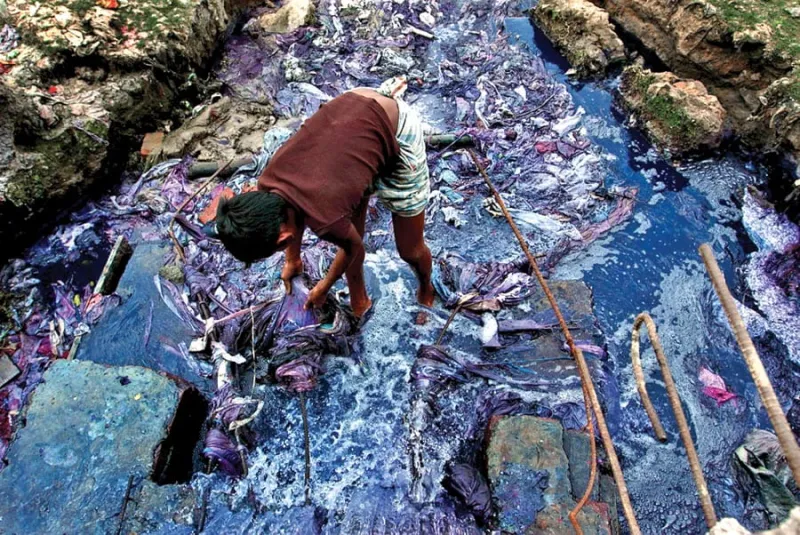
Across the United States, an estimated 450,000 brownfields — properties where past industrial or commercial use has left behind contamination, real or perceived — sit in various states of abandonment. For decades, these sites have been framed primarily as liabilities: legal burdens, public health threats, and fiscal drains on municipalities already stretched thin. But a growing body of ecological research, combined with renewed community advocacy and a shifting policy landscape, is revealing a more complicated and, in many ways, more hopeful story.
The Science of Accidental Ecosystems
When industry departs, it does not leave behind a sterile void. It leaves behind a radically altered but nonetheless functional substrate — one that, under the right conditions, can support surprising levels of biodiversity.
Post-industrial landscapes tend to share several characteristics that, counterintuitively, favor ecological colonization. The removal of active human management allows vegetation to establish without interference. Heterogeneous terrain — rubble fields, subsidence ponds, earthen berms, exposed bedrock — creates the kind of structural complexity that supports a wide range of species niches. And the very pollutants that make these sites hazardous to human health can, in some cases, select for hardy, stress-tolerant plant communities that outcompete invasive monocultures.
Researchers at Rutgers University studying post-industrial sites in the northeastern United States have documented native bee diversity in brownfields that rivals or exceeds that found in managed urban green spaces. Similarly, studies of decommissioned rail yards in Chicago found that spontaneous vegetation, including native prairie species, had colonized ballast gravel with minimal intervention. The lesson ecologists are drawing is not that contamination is benign, but that nature's recovery mechanisms are far more robust than conventional remediation frameworks have historically acknowledged.
Communities on the Front Lines of Reclamation
For the people who live adjacent to these sites, the ecological renaissance unfolding on contaminated land is not merely an academic curiosity. It is a matter of environmental justice, public health, and economic survival.
In Pittsburgh's Hazelwood neighborhood, residents spent years advocating for the remediation and repurposing of the former LTV Steel coke works, a sprawling brownfield that had anchored the community's industrial identity for over a century. The result — Hazelwood Green, a mixed-use redevelopment project that incorporates ecological restoration alongside commercial and residential development — represents one model for how contaminated land can be reclaimed for both human and non-human communities simultaneously.
Yet not every community has the political leverage or organizational capacity to push such projects forward. In smaller industrial cities across Ohio, Indiana, and Michigan, brownfields frequently remain in bureaucratic limbo for decades, caught between inadequate federal funding, liability concerns that discourage private investment, and local governments that lack the technical expertise to navigate the remediation process. The communities bearing the greatest burden from this inertia are disproportionately low-income and communities of color — a pattern that reflects the same inequities that originally determined where industrial facilities were sited.
The Regulatory and Financial Bottleneck
The primary federal mechanism for brownfield remediation is the Environmental Protection Agency's Brownfields Program, which provides grants and technical assistance to states, municipalities, and tribal governments. Since its establishment in the 1990s, the program has leveraged significant private investment and facilitated the cleanup of thousands of sites. The Bipartisan Infrastructure Law passed in 2021 injected additional funding into the program, raising grant caps and expanding eligibility.
But critics argue that the scale of federal investment remains fundamentally mismatched with the scope of the problem. The EPA estimates that full remediation of the nation's brownfields could cost upward of $200 billion. Current federal appropriations address a fraction of that figure annually. Meanwhile, the legal doctrine of "landowner liability" under the Comprehensive Environmental Response, Compensation, and Liability Act — commonly known as Superfund — continues to deter prospective purchasers and developers from acquiring contaminated properties, even when they had no role in creating the contamination.
Philanthropists and impact investors have begun to fill some of the gap, funding pilot projects that combine ecological restoration with workforce development and community land trusts. But systemic change, advocates argue, requires a recalibration of federal policy that treats brownfield remediation not merely as environmental cleanup but as a climate and biodiversity investment.
Rewilding as a Remediation Strategy
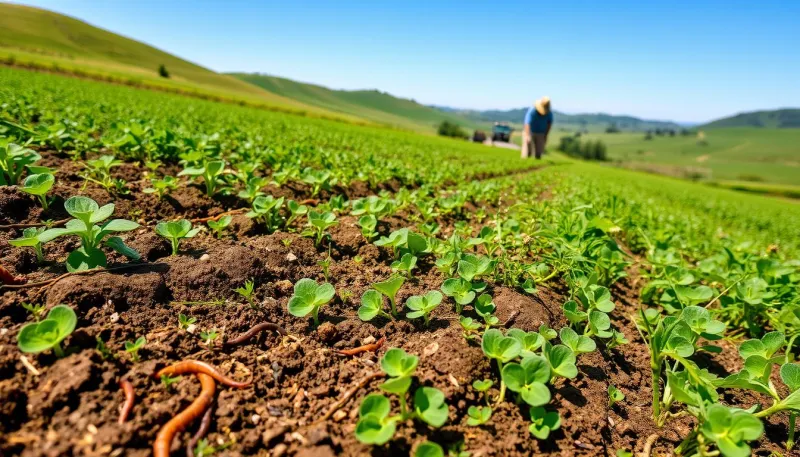
One of the more provocative ideas gaining traction among restoration ecologists is the deliberate use of phytoremediation — the deployment of plants capable of extracting or neutralizing soil contaminants — as a bridge strategy that simultaneously begins ecological recovery and reduces cleanup costs.
Sunflowers, alpine pennycress, and certain willow species have demonstrated the capacity to absorb heavy metals from contaminated soils. Mycorrhizal fungi networks can accelerate the breakdown of petroleum hydrocarbons. These biological tools are not replacements for conventional remediation in cases of acute toxicity, but they represent a more nuanced toolkit than the dig-and-dump approaches that have historically dominated the field.
Proponents of this integrated approach argue that it reframes the brownfield question: rather than asking how quickly a site can be rendered safe enough for human development, it asks how ecological processes can be engaged as active partners in the remediation process — reducing costs, building soil health, and establishing native plant communities that persist long after the cleanup machinery has moved on.
Toward a National Brownfield Strategy
The ecological potential of America's abandoned industrial land is not a reason to minimize the genuine public health urgency of contamination cleanup. Lead, arsenic, polycyclic aromatic hydrocarbons, and a constellation of other legacy pollutants continue to pose serious risks to communities living near these sites, and the moral imperative to address those risks is unambiguous.
But the emerging science of post-industrial ecology invites a broader conversation about what remediation is for, and what success looks like. A contaminated site returned to a sterile parking lot is, by one measure, remediated. A contaminated site transformed into a functioning wetland that filters stormwater, sequesters carbon, supports pollinators, and provides green space to an underserved neighborhood is something considerably more valuable.
America has spent a century and a half building an industrial economy on the premise that natural systems were inputs to be consumed. The ghost factories scattered across the Rust Belt and beyond are the ledger of that accounting. How the nation chooses to reckon with them will say a great deal about the kind of ecological future it is willing to imagine.