Lost in Transmission: The Invisible Energy Hemorrhage Buried Inside America's Electrical Grid
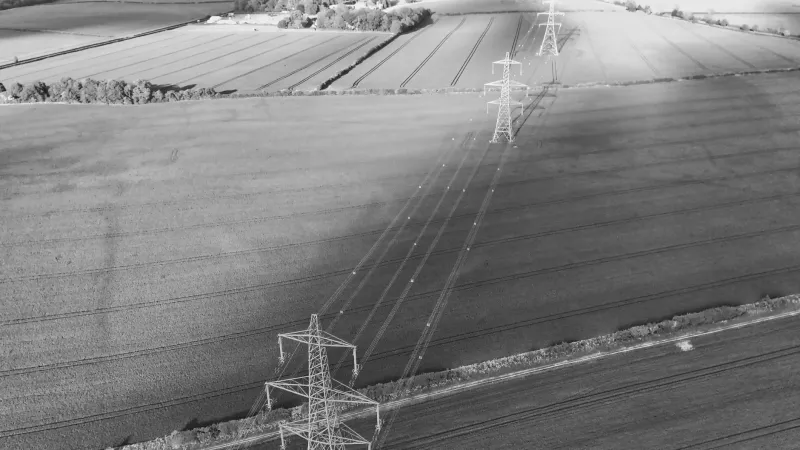
When Americans flip a light switch, they rarely contemplate the journey that electricity has already completed just to reach that moment. It has traveled from a generating station — perhaps a wind farm in West Texas, a natural gas plant in Pennsylvania, or a hydroelectric dam in the Pacific Northwest — through thousands of miles of transmission lines, stepped up and down through a series of aging transformers, and finally threaded through neighborhood distribution networks before arriving at a home or office. That journey is far less efficient than most people assume.
Between five and seven percent of all electricity generated in the United States never arrives at its intended destination. It dissipates as heat along transmission lines, bleeds away inside outdated transformer cores, and vanishes through inefficiencies embedded in distribution infrastructure that, in many parts of the country, was installed decades before the smartphone existed. The U.S. Energy Information Administration has documented this systemic loss consistently for years, and yet it rarely surfaces in mainstream conversations about energy policy or climate strategy.
The scale of the problem demands attention. In 2022, the United States generated approximately 4.2 trillion kilowatt-hours of electricity. Apply a conservative six-percent loss rate, and roughly 250 billion kilowatt-hours evaporated somewhere between the power plant and the end user. That figure exceeds the total annual electricity consumption of several mid-sized nations. It also represents an enormous invisible surcharge embedded in every utility bill — and a source of carbon emissions that goes largely unaccounted for in clean energy progress reports.
The Physics of Waste
Electrical losses in a transmission and distribution network are not accidental oversights — they are the predictable consequence of physics operating through imperfect infrastructure. When current flows through a conductor, resistance generates heat. The longer the wire and the higher the resistance, the more energy is lost to the surrounding environment rather than delivered to the customer. This phenomenon, described by Joule's Law, is as fundamental as gravity, and no grid will ever achieve zero loss. But the magnitude of current American losses reflects infrastructure choices, not physical inevitability.
Transformers are a particularly significant source of inefficiency. These devices, which adjust voltage levels as electricity moves from high-voltage transmission lines to lower-voltage distribution networks and finally into homes and businesses, are present at virtually every stage of the electrical journey. Older transformer designs rely on cores made from conventional electrical steel that generate what engineers call "no-load losses" — energy that bleeds away simply because the transformer is energized, regardless of whether any electricity is actually being delivered. Millions of these older units remain in service across the United States, many of them well past their optimal operating life.
The American Council for an Energy-Efficient Economy has long argued that accelerating the replacement of older distribution transformers with modern, high-efficiency units — particularly those using amorphous metal cores — represents one of the most cost-effective grid efficiency investments available. The efficiency gains from modern transformer technology are not marginal; they can reduce no-load losses by sixty to seventy percent compared with legacy equipment.
A Nation of Uneven Infrastructure
Grid losses are not distributed evenly across the country, and understanding the regional disparities reveals where the problem is most acute. States with older, more densely populated urban grids — particularly in the Northeast and parts of the Midwest — tend to carry infrastructure that has been incrementally patched and extended rather than systematically rebuilt. Meanwhile, rural states with vast service territories and long transmission distances face a different but equally serious challenge: electricity must travel farther, and the economics of upgrading sparsely distributed infrastructure are daunting for smaller utilities operating on thin margins.
Some utilities have made meaningful progress. Pacific Gas & Electric in California, despite its well-publicized challenges, has invested substantially in grid modernization as part of the state's broader clean energy mandate. Duke Energy in the Carolinas has pursued targeted transformer replacement programs. But for every utility moving aggressively toward modernization, others are deferring capital expenditures, managing aging assets with maintenance rather than replacement, and passing the resulting inefficiency costs along to ratepayers.
The regulatory environment compounds the problem. Utility rate structures in most states are set by public utility commissions that historically have been more attentive to the capital costs of new generation than to the operational inefficiencies of the delivery network. A utility that builds a new power plant can often recover that investment through rate increases in a relatively straightforward process. The business case for investing in infrastructure upgrades that reduce losses — and therefore reduce the total volume of electricity that needs to be generated and billed — is structurally more complicated, even when the efficiency gains are demonstrably cost-effective over time.
The Climate Calculus
Grid losses carry a carbon cost that the clean energy transition cannot afford to ignore. When electricity generated by a coal or natural gas plant is lost in transmission, the emissions associated with producing that electricity have already entered the atmosphere — but no useful energy was delivered to offset them. As the grid incorporates more renewable generation, this calculus shifts somewhat, but does not disappear. Renewable electricity that is wasted in transmission represents squandered generation capacity, lost investment, and a systemic drag on decarbonization progress.
Consider what a one-percentage-point improvement in national grid efficiency would mean in practice. Based on current generation volumes, reducing losses from six percent to five percent would recover roughly 42 billion kilowatt-hours annually — enough to power approximately 3.8 million average American homes. That recovered electricity requires no new generating capacity, no new solar panels, no new wind turbines. It is simply electricity that was already generated but previously thrown away.
The Inflation Reduction Act of 2022 allocated significant funding toward grid modernization, and the Bipartisan Infrastructure Law included provisions specifically targeting transmission infrastructure. Federal programs administered through the Department of Energy have begun channeling investment toward both long-distance transmission capacity and distribution-level efficiency improvements. These are genuine steps forward. But the scale of the challenge — a grid comprising millions of miles of wire, hundreds of thousands of transformers, and infrastructure spread across every climate zone and geography in the nation — means that federal investment alone will not be sufficient.
Modernization at the Margins
Some of the most promising developments in grid efficiency are emerging not from wholesale infrastructure replacement, but from intelligent monitoring and management technologies. Advanced metering infrastructure, grid sensors, and AI-driven load management systems are enabling utilities to identify loss hotspots, optimize power flows, and reduce inefficiencies without always requiring physical infrastructure replacement. These tools represent a pragmatic bridge between the grid America has today and the one it needs to build.
High-voltage direct current transmission technology also deserves serious policy attention. HVDC lines suffer substantially lower resistive losses over long distances than conventional alternating current transmission, making them particularly well-suited for moving large volumes of renewable energy from generation-rich regions — the wind corridors of the Great Plains, the solar zones of the Southwest — to population centers in the East and Midwest. Several long-distance HVDC projects are in various stages of planning and development, but permitting delays and right-of-way challenges continue to slow progress.
The electrical grid is, in many respects, the circulatory system of the American economy. Its health determines not only the reliability of power delivery but the efficiency with which the nation converts fuel — whether fossil or renewable — into productive energy. The losses embedded in that system are not a minor technical footnote. They are a significant, measurable, and addressable drag on both economic productivity and climate progress. Treating them as such, with the policy seriousness and investment urgency they deserve, is a choice the country has yet to fully make.