The Loudest Place in America Is Silent on the Map: Why Sound Pollution Deserves a Seat at the Climate Table
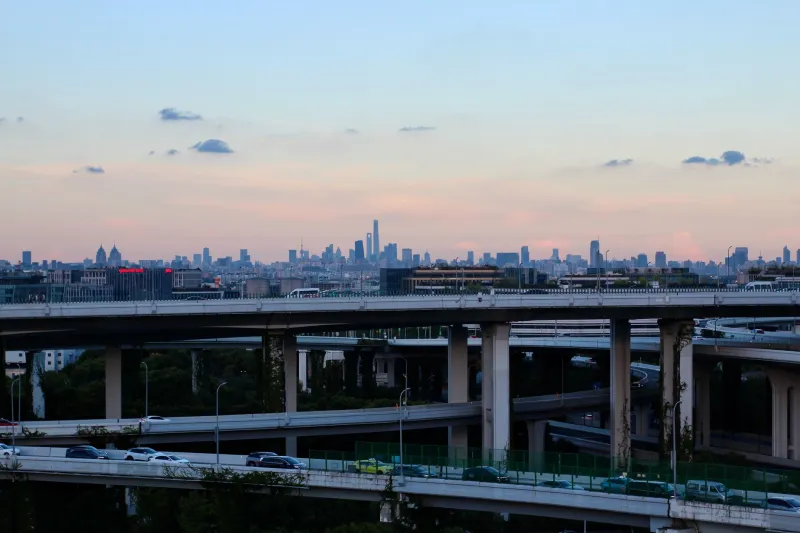
Stand at the edge of the Kennedy Expressway in Chicago and you will hear it: a relentless, low-frequency roar that never fully subsides. It is the soundtrack of modern American life, and according to a growing body of research, it is quietly reshaping ecosystems, disrupting wildlife, and eroding human health in ways that never appear on an emissions report.
Noise pollution occupies an unusual position among environmental threats. It leaves no residue in soil or water, generates no visible plume, and vanishes the instant its source goes quiet. That transience has made it easy to ignore. But the absence of a lasting footprint does not mean the absence of harm — and scientists mapping America's acoustic landscape are increasingly arguing that sound deserves the same policy attention we give to air and water quality.
What Noise Does to the Natural World
Consider the whale. In the Gulf of Mexico and along the Eastern Seaboard, commercial shipping lanes generate sustained low-frequency rumble that travels for miles underwater, directly overlapping with the frequency ranges baleen whales use to communicate, navigate, and locate mates. Researchers have documented whales in high-traffic corridors producing calls at elevated volumes and simplified frequencies — effectively shouting over the din. Chronic acoustic stress has been linked to elevated stress hormones in North Atlantic right whales, a species hanging on at fewer than 350 individuals.
The disruption extends well inland. Studies across fragmented American forests have found that birds nesting near highways lay fewer eggs, abandon nests more frequently, and in some cases produce offspring with compromised stress responses. One widely cited study of the New Mexico desert found that even the pinyon pine ecosystem suffered: birds that would normally disperse pine seeds avoided noisy areas, and seedling numbers dropped accordingly. Sound, it turns out, is not a backdrop to an ecosystem. It is a load-bearing structure.
The Human Toll We Refuse to Measure
For people, the consequences are less poetic but no less serious. The World Health Organization has identified traffic noise as the second-most harmful environmental stressor in Western Europe, after air pollution. In the United States, where more than 45 million people live near major highways and nearly a third of the population is exposed to significant transportation noise, the cardiovascular literature is sobering: chronic noise exposure is associated with elevated blood pressure, increased hypertension risk, and disrupted sleep that compounds over years into measurable cardiac harm.
Yet the Clean Air Act regulates particulates, not decibels. The EPA's Office of Noise Abatement and Control, established in 1972, was defunded in the early 1980s, leaving noise regulation largely to state and local governments with wildly inconsistent standards. Federal oversight of the country's acoustic environment essentially ended four decades ago — and nobody has stepped meaningfully into the vacuum.
Mapping the Quiet
A small but determined research community is working to change that. The National Park Service's Natural Sounds and Night Skies Division maintains some of the most comprehensive acoustic monitoring in the country, and its findings are stark: noise pollution now permeates many national park wilderness areas, with human-made sound audible in a majority of monitored sites. In response, parks like Glacier and Muir Woods have piloted quiet zones — restricting generators, requiring shuttle buses, and even asking visitors to embrace silence.
On the infrastructure side, "quiet pavement" pilot programs in states like Arizona and California have tested porous asphalt mixes that measurably reduce tire noise, the dominant contributor to highway sound. The results are promising but underfunded, treated as a quality-of-life nicety rather than a public health intervention. Meanwhile, acoustic ecologists are building increasingly detailed national sound maps, giving planners the data they would need to treat noise as a genuine environmental variable — if the political will existed to use it.
Reframing Quiet as Infrastructure
The encouraging truth is that noise is among the most reversible of environmental harms. Unlike carbon dioxide, which persists in the atmosphere for a century, sound disappears the moment we stop making it. Electrifying vehicle fleets, expanding quiet pavement technology, rerouting shipping lanes away from critical whale habitat, and restoring federal noise monitoring would each deliver benefits within years, not decades.
What is missing is not solutions but imagination. Americans have been conditioned to treat noise as the price of progress — an ambient fact of life rather than a policy failure. But a country that has learned to see carbon, to track particulates, and to measure water quality can learn to hear its environment too.
The loudest places in America are easy to find. The harder work is making the rest of the country listen.