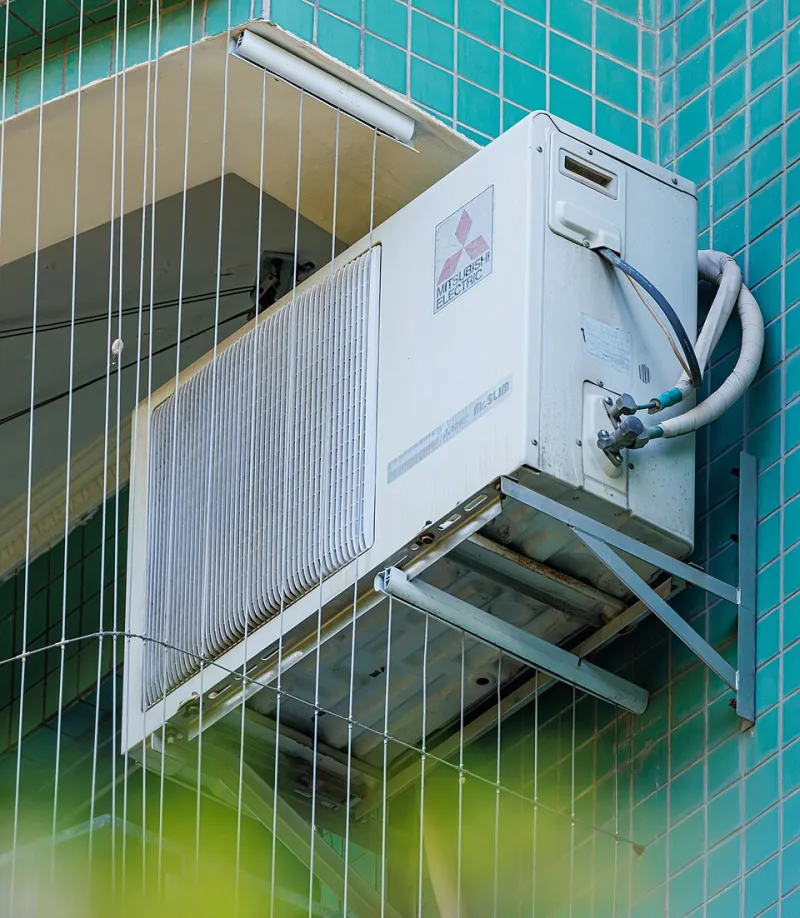
Thermostat Nation: How America's Unyielding Demand for Thermal Comfort Is Quietly Sabotaging the Clean Energy Transition
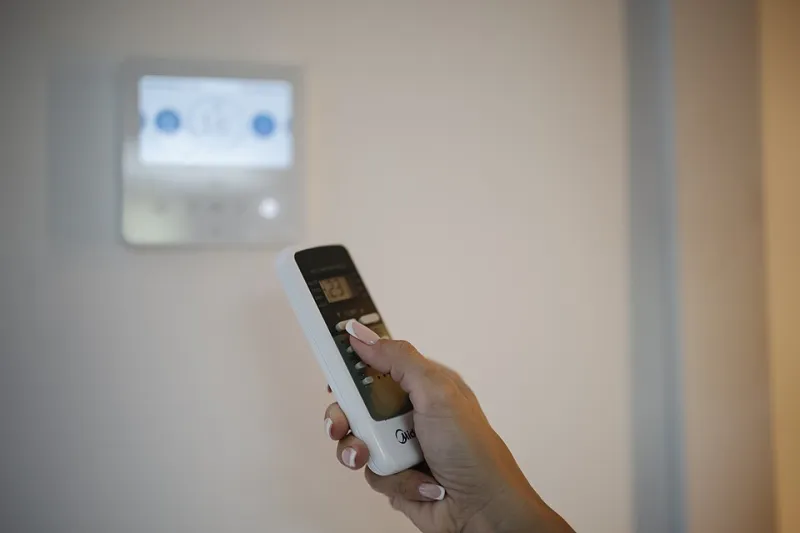
Photo: Shixart1985, CC BY 2.0, via Wikimedia Commons
Somewhere between the post-war housing boom and the proliferation of central air conditioning, Americans developed an expectation that has since hardened into something closer to a constitutional right: the indoors should always feel like spring. Not too warm, not too cool, ideally hovering within a two-degree band regardless of what the atmosphere outside is doing. This expectation—so thoroughly normalized that most Americans rarely examine it—carries an enormous carbon price tag that the clean energy transition has yet to adequately address.
The numbers are difficult to dismiss. According to the U.S. Energy Information Administration, space heating and cooling together account for roughly 40 percent of all energy consumed in American homes. In commercial buildings, that figure climbs even higher when ventilation and humidity control are factored in. These are not marginal loads. They represent the single largest category of energy demand in the built environment, and they are among the most difficult to decarbonize—not primarily because of technological limitations, but because of the cultural and infrastructural rigidity surrounding when, how, and to what degree Americans expect thermal management to operate.
The Making of a Comfort Paradigm
The roots of America's thermostat culture run deeper than mere preference. Following World War II, the rapid expansion of suburban housing created millions of homes designed around mechanical climate control as a baseline assumption rather than a luxury. Developers built homes with less thermal mass, thinner walls, and larger window-to-wall ratios than many European counterparts—architectural choices that made sense only if a furnace or air conditioner was always standing by to compensate. The buildings themselves encoded dependency.
Corporate office culture reinforced this trajectory. The rise of the sealed glass office tower in the mid-twentieth century created workplaces that were structurally incapable of passive ventilation. Thermostats became a proxy for workplace control and employee productivity, a belief that research has since complicated considerably. The ASHRAE 55 thermal comfort standard, which governs indoor climate conditions across much of American commercial construction, reflects a relatively narrow comfort band that, critics argue, prioritizes consistency over adaptability.
What emerged over decades was not simply a preference but an infrastructure—one built around the assumption that energy would remain cheap, abundant, and consequence-free. Behavioral expectations calcified around that infrastructure, and the two now reinforce each other in ways that make both difficult to reform independently.
The Renewable Mismatch Problem
The transition to renewable energy does not simply swap one power source for another. Solar and wind generation are variable by nature, producing electricity when the sun shines and the wind blows rather than when demand peaks. Thermal comfort loads, by contrast, are among the most demand-inelastic categories in the energy system. When temperatures spike during a July heat wave, millions of air conditioners switch on simultaneously, creating sharp demand peaks that overwhelm grid capacity and, in the current energy mix, are often met with natural gas peaker plants—some of the least efficient and most carbon-intensive generators in operation.
This mismatch is not incidental. It is structural. The inflexibility of American thermal comfort expectations creates what energy economists call a 'demand rigidity' problem: a category of consumption that resists the kind of load-shifting and demand response that a renewable grid depends upon. Smart thermostats and grid-responsive HVAC systems offer partial remedies, allowing utilities to modulate demand during peak periods, but their adoption has been slower than projected, and consumer resistance to perceived comfort disruptions remains a significant barrier.
Europe offers an instructive contrast. In Germany, the United Kingdom, and Scandinavia, building codes have long emphasized passive thermal performance—thick insulation, triple-glazed windows, strategic orientation—reducing the baseline mechanical load before any active system is required. Cultural norms have adapted accordingly. It is not uncommon in many Northern European households to open windows for ventilation on mild days, tolerate a wider indoor temperature range seasonally, and rely on radiant heating systems that respond more slowly but more efficiently than forced-air American furnaces. These are not sacrifices born of poverty; they are habits shaped by different regulatory frameworks and energy pricing structures.
What Technology Can—and Cannot—Fix
American innovation culture tends to reach for the technological solution first, and there are genuine reasons for optimism on that front. Heat pumps, which transfer thermal energy rather than generating it, can deliver two to four units of heating or cooling for every unit of electricity consumed—a dramatic efficiency improvement over resistance heating and conventional air conditioning. The Inflation Reduction Act of 2022 provided meaningful federal incentives for heat pump adoption, and installation rates have risen accordingly in several states.
Building envelope improvements—better insulation, air sealing, high-performance windows—reduce the total thermal load a building must manage, shrinking the gap between what passive design can provide and what mechanical systems must supply. Thermal energy storage, which accumulates heating or cooling capacity during off-peak hours for use during peak demand, offers a promising bridge between variable renewable supply and relatively stable comfort demand.
Yet technology alone cannot resolve a problem that is partly behavioral in origin. Heat pumps installed in leaky, poorly insulated homes deliver a fraction of their theoretical efficiency. Smart thermostats programmed to replicate the same narrow comfort band as their analog predecessors provide grid flexibility only if occupants allow them to do so. The tools exist; the cultural and behavioral frameworks to deploy them effectively are still under construction.
Redefining Comfort in a Carbon-Constrained World
There is a growing body of research suggesting that human thermal comfort is considerably more flexible than American building standards and consumer expectations imply. Studies in adaptive comfort modeling demonstrate that occupants in naturally ventilated buildings tolerate—and often prefer—a wider range of indoor temperatures than those in mechanically conditioned spaces, particularly when they have some degree of personal control over their environment. The expectation of a fixed indoor climate, it turns out, is partly a product of that very fixity.
This does not mean that Americans should simply be asked to endure discomfort in the name of climate responsibility. That framing has historically proven both politically untenable and socially inequitable, placing disproportionate burden on lower-income households that lack the resources to adapt. Rather, it suggests that a more honest public conversation about thermal comfort—one that acknowledges its constructed nature, its carbon consequences, and its incompatibility with a renewable energy future—is long overdue.
Pricing signals matter enormously in this conversation. Time-of-use electricity rates, which charge more during peak demand periods, create genuine incentives for behavioral flexibility without mandating it. Stronger building energy codes, particularly for new construction, can prevent the next generation of homes from encoding the same thermal dependencies as the last. And public education campaigns that reframe adaptability not as deprivation but as environmental literacy could gradually shift the cultural baseline.
The thermostat is a small device. But the assumptions embedded in the number it displays—about comfort, about energy, about the relationship between the two—are anything but trivial. Confronting those assumptions may be one of the less glamorous tasks of the clean energy transition. It is also, increasingly, one of the most necessary.