Still Drawing Power: The Quiet Electrical Drain Hiding Behind Every 'Off' Button in America
There is a particular kind of waste that thrives in the dark — not in the flicker of a forgotten light bulb or the hum of an overstressed air conditioner, but in the near-imperceptible trickle of electricity flowing through devices that everyone in the household believes are turned off. This is standby power consumption, sometimes called phantom load or vampire power, and it is one of the most pervasive, underregulated, and surprisingly consequential inefficiency problems embedded in the American domestic energy landscape.
The average U.S. household contains somewhere between forty and sixty devices capable of drawing power in standby mode at any given moment. Televisions waiting for a remote signal. Gaming consoles poised for a voice command. Microwave ovens illuminating a clock that no one checks. Cable boxes cycling through overnight software updates. Individually, each device draws only a few watts. Collectively, across 130 million American households, the arithmetic becomes genuinely alarming.
The Scale of a Silent Problem
The Lawrence Berkeley National Laboratory, which has tracked standby consumption for decades, estimates that idle power draws account for roughly five to ten percent of residential electricity use in the United States. Translated into real-world terms, that figure represents approximately 50 billion kilowatt-hours of electricity consumed annually — power generated, transmitted, and paid for without delivering a single useful function to any consumer.
The financial cost to American households hovers somewhere between $10 billion and $19 billion per year, depending on regional electricity rates and household device density. The carbon cost is proportionally significant: given that the U.S. electrical grid still derives a substantial share of its power from natural gas and, in certain regions, coal, those phantom watts carry real emissions weight — an estimated 27 million metric tons of carbon dioxide equivalent annually, according to various modeling efforts. That is roughly equivalent to putting six million additional passenger vehicles on American roads.
What makes this particularly frustrating from a policy standpoint is that the technical solutions are neither novel nor expensive. Low-power microcontrollers, improved transformer design, and intelligent power management firmware can reduce standby draws by 80 to 90 percent with negligible cost implications at the manufacturing level. The barrier is not engineering — it is the absence of regulatory pressure compelling manufacturers to deploy what they already know how to build.
Which Devices Are the Worst Offenders?
Not all phantom loads are created equal. Research consistently identifies a handful of device categories responsible for a disproportionate share of standby consumption in American homes.
Cable and satellite set-top boxes remain among the most egregious culprits. A typical cable box draws between 15 and 30 watts continuously — whether the television is on or not, whether anyone is home or not — because operators configure them to remain perpetually ready for scheduled recordings and overnight firmware pushes. A household with two set-top boxes may spend more electricity keeping those boxes in standby over the course of a year than it does running a refrigerator.
Home audio receivers, older gaming consoles, and network-connected devices like smart speakers and streaming sticks also contribute meaningfully. Devices equipped with instant-on features — a convenience that shaves two or three seconds off startup time — typically maintain full or near-full power states indefinitely, trading a trivial user experience benefit for continuous electrical consumption.
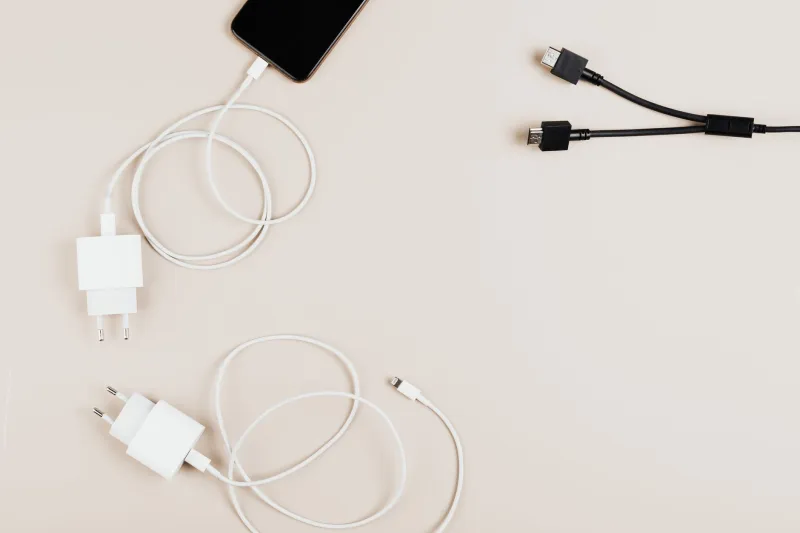
Perhaps most overlooked are the external power supplies and chargers that populate every room in a modern home. A charger left plugged in without a device attached still draws a small but nonzero current. Multiply that by the dozens of such adapters present in the average American household, and the aggregate load becomes meaningful.
The Regulatory Gap
The United States has made some progress on standby power standards. The Department of Energy has established efficiency requirements for certain external power supplies, and the Environmental Protection Agency's ENERGY STAR program includes standby power criteria for qualifying products. California, characteristically, has pushed further than federal minimums, imposing stricter standby limits on televisions and other consumer electronics.
But the regulatory architecture remains fragmented, inconsistently enforced, and significantly behind the technical frontier. Federal standby power standards for many device categories have not been substantively updated in years, leaving manufacturers free to ship products that consume far more idle power than current technology would require. The cable and satellite industry, in particular, has operated for years under a voluntary agreement framework rather than binding efficiency mandates — an arrangement that consumer advocates and energy researchers have repeatedly criticized as inadequate.
The contrast with peer nations is instructive. The European Union's Ecodesign Regulation imposes a one-watt standby limit across a broad range of consumer electronics, a standard that has demonstrably driven product redesign across European markets. Australia and South Korea have adopted similarly aggressive frameworks. The United States, despite being one of the world's largest per-capita electricity consumers, continues to tolerate standby draws that European regulators would consider unacceptable.
What Would Systemic Change Actually Look Like?
Addressing phantom load at scale requires action on at least three levels simultaneously.
At the federal regulatory level, the Department of Energy should update and expand mandatory standby power standards across all major consumer electronics categories, closing the loopholes that have allowed set-top boxes and other high-draw devices to escape meaningful efficiency requirements. The one-watt threshold adopted by the EU provides a reasonable, technically achievable benchmark for American regulators to target.
At the utility and grid level, time-of-use pricing structures that make the true cost of continuous low-level consumption visible to consumers can shift purchasing behavior over time. When households understand that their always-on devices are generating measurable monthly costs, demand for genuinely low-standby products tends to increase — a market signal that, in turn, incentivizes manufacturers to compete on efficiency.
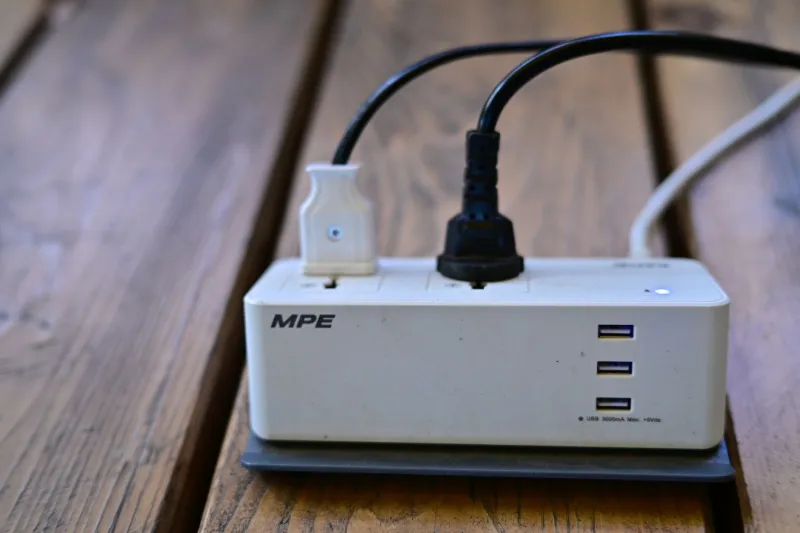
At the household level, smart power strips equipped with occupancy sensing or scheduled shutoff capabilities can eliminate phantom loads from entertainment centers and home office setups without requiring consumers to manually unplug devices. These products exist, they are affordable, and they are dramatically underutilized — in part because the problem they solve has never received the public communication investment that other efficiency measures have.
A Low-Hanging Fruit the Transition Cannot Afford to Ignore
The clean energy transition is frequently discussed in terms of its most visible and capital-intensive components: offshore wind installations, utility-scale solar arrays, grid-scale battery storage, and the electrification of transportation. These investments are essential, and their scale is rightly celebrated.
But the transition also has a demand side, and that side is littered with efficiency opportunities that require no new infrastructure, no breakthrough technology, and no significant consumer sacrifice. Standby power consumption is among the most tractable of these opportunities. The watts being wasted in American living rooms and kitchens every night are watts that never need to be generated — which means they represent avoided emissions at zero additional cost, avoided grid stress without a single new transmission line, and avoided consumer expenditure without any reduction in quality of life.
Regulators who have treated phantom load as a second-tier concern have, in effect, chosen to leave one of the cleanest wins in energy policy sitting on the table. The science is settled, the technology is available, and the economic case is overwhelming. What remains is the political will to act — and the public pressure to demand it.