Built to Last, Priced to Pollute: The Urgent Case for Reinventing American Concrete
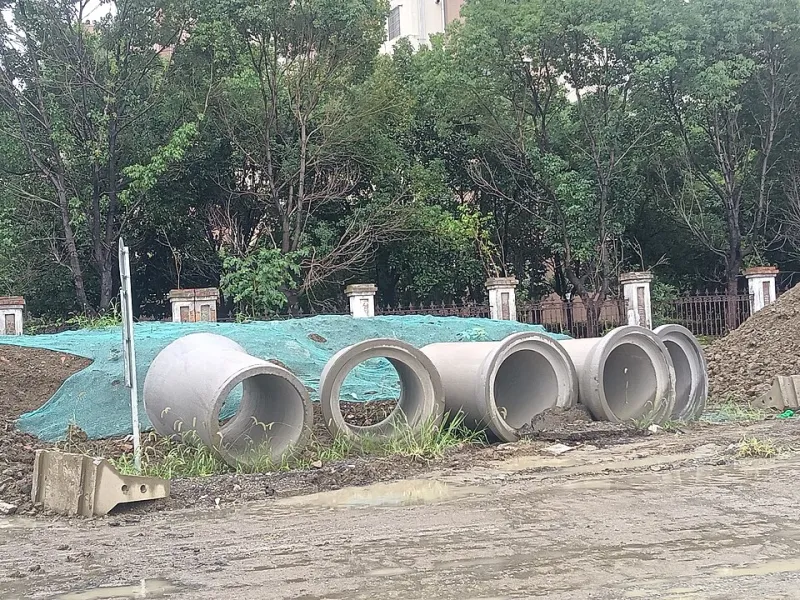
Photo: Fumikas Sagisavas, CC0, via Wikimedia Commons
Every highway overpass, every hospital foundation, every sidewalk square beneath your feet shares a common origin: a gray, unremarkable powder called Portland cement. Mixed with water, sand, and aggregate, it becomes concrete — the material that quite literally holds American civilization together. It is also, by most measures, one of the single most carbon-intensive substances humanity has ever mass-produced.
Globally, the production of cement accounts for somewhere between 7% and 8% of all carbon dioxide emissions — more than the entire aviation industry, and roughly three times the emissions of all the world's shipping combined. In the United States alone, the concrete and cement sector releases approximately 90 million metric tons of CO₂ annually. For a country that has pledged to reach net-zero emissions by 2050, that number represents a profound and largely underacknowledged problem.
The Chemistry of the Problem
Understanding why concrete is so carbon-intensive requires a brief detour into industrial chemistry. Portland cement is manufactured by heating limestone — calcium carbonate — in massive kilns at temperatures exceeding 2,700 degrees Fahrenheit. This process, known as calcination, drives off CO₂ as a chemical byproduct. Roughly 60% of cement's carbon emissions come from this unavoidable chemical reaction; the remaining 40% comes from burning fossil fuels to generate the extraordinary heat those kilns require.
This dual emission source is what makes decarbonizing cement so uniquely difficult. Switching kilns to renewable electricity or green hydrogen can address the energy side of the equation, but the calcination reaction releases CO₂ regardless of what fuel powers the process. Any genuine solution must contend with both halves of that equation simultaneously.
The scale of production compounds the challenge considerably. The United States consumes roughly 100 million metric tons of cement each year, and demand is rising. The Infrastructure Investment and Jobs Act, signed into law in 2021, authorized $1.2 trillion in federal spending, much of it directed toward roads, bridges, and public transit systems — all of which are built primarily from concrete. The climate ambitions embedded in that legislation exist in uncomfortable tension with the carbon cost of the very material required to fulfill them.
Emerging Alternatives Gaining Ground
The good news is that the scientific and engineering communities have not been idle. A diverse portfolio of lower-carbon concrete formulations has emerged over the past two decades, several of which are already being deployed at meaningful scale in forward-thinking American cities.
Supplementary cementitious materials (SCMs) represent perhaps the most immediately practical pathway. Fly ash — a byproduct of coal combustion — and slag cement, derived from steel manufacturing, can replace 20% to 50% of the Portland cement in a standard mix without sacrificing structural performance. Both materials have been used in American construction for decades, and their carbon footprints are dramatically lower than conventional cement. Cities like Chicago and Seattle have begun mandating minimum SCM content in publicly funded projects, a policy lever that costs relatively little and delivers measurable emissions reductions.
Geopolymer concrete takes the substitution concept further, replacing Portland cement almost entirely with industrial byproducts activated by alkaline solutions. Research institutions from MIT to the University of California system have demonstrated that geopolymer formulations can reduce embodied carbon by 40% to 80% compared to conventional mixes. The Australian construction sector has deployed geopolymer concrete in major infrastructure projects for years; American adoption has been slower, hampered by a regulatory framework built around Portland cement specifications.
Perhaps the most ambitious approach involves carbon mineralization — essentially teaching concrete to absorb CO₂ rather than emit it. Companies like CarbonCure Technologies, which operates across North America, inject captured CO₂ into fresh concrete during mixing. The gas reacts with calcium ions in the mix and permanently mineralizes, reducing the cement content needed to achieve target strength. The process is additive, not substitutive, meaning it can be integrated into existing production lines with relatively modest capital investment.
Startups including Brimstone and Sublime Systems are pursuing even more radical reformulations, developing cement chemistries that bypass calcination altogether. Brimstone's process, for instance, uses calcium silicate rocks rather than limestone, producing cement with a near-zero process-emission profile. These technologies remain in early commercial stages, but they have attracted serious venture capital and federal attention.
The Barriers Are More Political Than Technical
If viable alternatives exist, why does the American construction industry continue to pour — quite literally — billions of tons of conventional concrete every year? The answers are instructive, and they reveal how deeply institutional inertia can obstruct even well-documented environmental imperatives.
Building codes in most U.S. states were written around Portland cement's performance characteristics and have not been meaningfully updated to accommodate newer formulations. Engineers and project managers, operating under tight liability constraints, default to materials with long track records. Specifying a novel low-carbon mix introduces perceived risk that most contractors and municipal procurement officers are reluctant to absorb, even when the technical case is sound.
The economic calculus also presents complications. Low-carbon alternatives are frequently more expensive at point of purchase, despite offering comparable or superior lifecycle performance. When public projects are evaluated primarily on upfront cost — as they routinely are under standard procurement rules — greener options lose bids they would win under a total-cost-of-ownership framework. Several states have begun experimenting with buy-clean procurement policies that require bidders to disclose and limit the embodied carbon of construction materials, but these initiatives remain geographically uneven and politically contested.
The cement industry itself, dominated by a small number of multinational corporations, has historically invested more in lobbying against carbon pricing than in accelerating the transition to lower-emission products. That posture is beginning to shift as regulatory pressure mounts and major corporate clients issue their own supply-chain decarbonization commitments, but the pace of voluntary change has been insufficient.
The Policy Levers That Could Accelerate Change
Federal action remains the most powerful available accelerant. The Environmental Protection Agency has authority under the Clean Air Act to regulate CO₂ from industrial point sources, including cement kilns — authority it has exercised only partially and inconsistently. A durable federal carbon price, long discussed and never enacted, would immediately restructure the competitive economics of low-carbon concrete by internalizing a cost that conventional production currently externalizes onto the atmosphere.
More tractably, the federal government could use its own procurement power to drive demand. The General Services Administration manages billions of dollars in construction annually. Requiring embodied carbon disclosures and imposing declining carbon caps on federally funded projects would create an immediate, large-scale market signal for lower-emission alternatives — one that would justify the capital investment needed to bring emerging technologies to commercial scale.
Some states are not waiting. Colorado, California, and New York have each advanced legislation or executive action targeting embodied carbon in public construction. These efforts are meaningful, but they are insufficient in isolation. Concrete's carbon problem is national in scope; addressing it requires national coordination.
A Foundation Worth Rebuilding
There is something fitting about the fact that concrete — a material humans have used in some form since the Roman Empire — now sits at the center of one of the 21st century's most consequential environmental challenges. The Romans, incidentally, made their own version of low-carbon concrete using volcanic ash as a binder, a formula that proved remarkably durable and, by modern standards, far less carbon-intensive than what we pour today.
The knowledge to do better has always been available. What has been lacking is the collective will to demand it. As the United States embarks on the largest infrastructure investment in a generation, the choice of what to build with is not merely a procurement question. It is a climate decision — one that will be embedded in bridges and buildings for the next century, whether we acknowledge it or not.