Cultivated Meat's Climate Credentials Are Being Oversold — and the Planet Can't Afford the Confusion
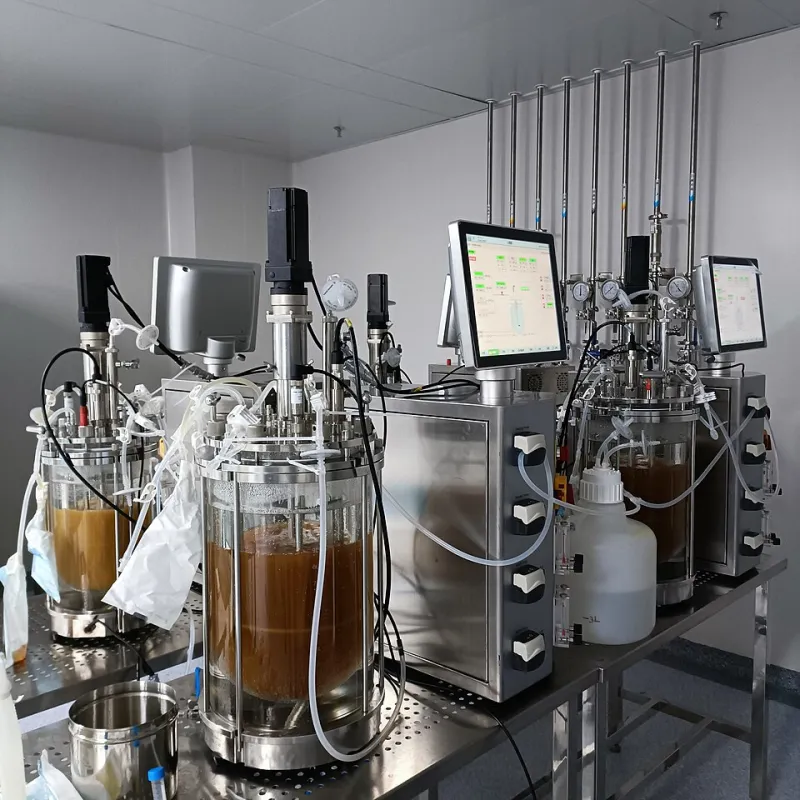
Photo: Habin Zhang, CC BY-SA 4.0, via Wikimedia Commons
The pitch is seductive in its simplicity: take a small biopsy from a living animal, culture the cells in a controlled bioreactor environment, and produce meat without slaughter, without feedlots, and without the vast greenhouse gas emissions that make conventional livestock agriculture one of the primary drivers of planetary warming. Cellular agriculture has attracted billions of dollars in venture capital, the enthusiastic endorsement of a cohort of high-profile technologists, and regulatory approval in Singapore and, more recently, the United States. Its proponents speak of it in the register of inevitability.
The problem is that the environmental case for lab-grown meat is considerably more ambiguous than its most vocal advocates tend to acknowledge — and in a policy environment where clarity about climate solutions is urgently needed, that ambiguity carries real costs.
The Energy Equation Nobody Wants to Discuss
Conventional beef production is, by virtually any measure, an ecological catastrophe. It is responsible for significant methane emissions, consumes extraordinary volumes of water and grain, and drives deforestation on a scale that few other human activities can match. These are not contested facts. The question is not whether the status quo is sustainable — it manifestly is not — but whether cultivated meat represents a genuine improvement or merely a different set of problems dressed in the language of innovation.
A 2023 study published in the journal PLOS ONE by researchers at the University of California, Davis, delivered a finding that reverberated through the food technology sector: depending on the energy source used to power production, cultivated meat could, over a long time horizon, generate more warming than conventional beef. The mechanism is counterintuitive but scientifically coherent. Conventional livestock production generates large quantities of methane, a potent but relatively short-lived greenhouse gas. Cultivated meat production, if powered by fossil fuels, generates carbon dioxide — which persists in the atmosphere for centuries. The climate math, it turns out, depends heavily on assumptions that the industry's promotional materials rarely make explicit.
This does not mean cultivated meat is necessarily worse than beef. It means that the comparison is energy-source-dependent in ways that have profound implications for policy and investment. A cultivated meat facility powered entirely by renewable electricity presents a genuinely different climate profile than one drawing from a carbon-intensive grid. The United States' electrical grid, despite significant progress, remains far from fully decarbonized — a fact that complicates projections about near-term emissions reductions from cellular agriculture.
The Fetal Serum Problem
Beyond energy, the biological inputs required for cell culture present their own complications. The standard growth medium used to proliferate animal cells in laboratory settings has historically contained fetal bovine serum — a product derived from the blood of fetal calves extracted during slaughter. The ethical and logistical tensions of producing "slaughter-free" meat using a slaughterhouse byproduct are, to put it gently, significant.
The industry is aware of this problem and is actively working to develop serum-free and animal-component-free growth media. Several companies have announced partial or complete transitions to alternative formulations. But the development of cost-effective, scalable, animal-free growth media remains one of the field's central unsolved challenges — and the solutions currently available are either prohibitively expensive, not yet proven at commercial scale, or reliant on inputs whose own environmental footprints require scrutiny.
The broader point is that cellular agriculture is not a mature technology being deployed at scale. It is an early-stage industry making ambitious claims about a future that has not yet been demonstrated to be technically or economically achievable. There is a meaningful difference between those two things, and the conflation of aspiration with evidence does a disservice to the public and to policymakers trying to allocate limited climate resources.
What We're Not Funding Instead
The billions of dollars flowing into cellular agriculture exist within a finite landscape of climate investment. Every dollar directed toward cultivated meat startups is, at least in opportunity-cost terms, a dollar not directed toward interventions with more established track records of emissions reduction.
Regenerative agriculture — farming systems designed to rebuild soil organic matter, enhance water retention, and sequester atmospheric carbon — has demonstrated measurable climate benefits across a growing body of peer-reviewed research. Transitioning American commodity agriculture toward regenerative practices at scale would require significant investment in farmer education, technical assistance, and market development. That investment has not materialized at anything approaching the level of enthusiasm the sector warrants.
Similarly, the plant-based protein sector — which has faced its own market headwinds after an initial wave of consumer enthusiasm — continues to innovate in ways that deserve more sustained attention. Novel fermentation-based proteins, precision fermentation platforms producing specific functional ingredients, and legume-based food systems all offer near-term emissions reductions that do not depend on solving the engineering challenges currently confronting cellular agriculture.
None of this is an argument against continued research into cultivated meat. Basic science funding for cellular agriculture is justifiable on multiple grounds, including food security, pandemic preparedness, and long-term protein diversification. The argument, rather, is against the premature elevation of an unproven technology to the status of climate solution — particularly when that elevation comes at the expense of more immediate interventions.
The Narrative Problem
There is a specific kind of harm that comes from overpromising on climate technology, and it is worth naming directly. When a solution is positioned as transformative before the evidence supports that characterization, it creates conditions for disillusionment that can set back the broader project of building public support for climate action.
The American consumer is already navigating a landscape of competing and sometimes contradictory sustainability claims. Greenwashing is endemic across industries. Trust in institutional actors — including both government regulators and corporate sustainability commitments — is fragile. Introducing cultivated meat into that environment with marketing language that outstrips the scientific consensus does not serve the cause of genuine climate progress.
The Green Medium's position is not that cultivated meat is a fraud or a dead end. It is that intellectual honesty about the technology's current limitations is a prerequisite for making sound decisions about where to direct the urgency, the capital, and the policy attention that the climate crisis demands. The protein transition is real and necessary. The path to achieving it runs through evidence, not enthusiasm.
America's food system needs transformation. The question is whether we invest in that transformation with clear eyes about what works now, what might work later, and what the planet cannot afford to wait for.