Green Energy's Dirty Secret: The Human and Ecological Toll of the Minerals Powering Our Clean Future
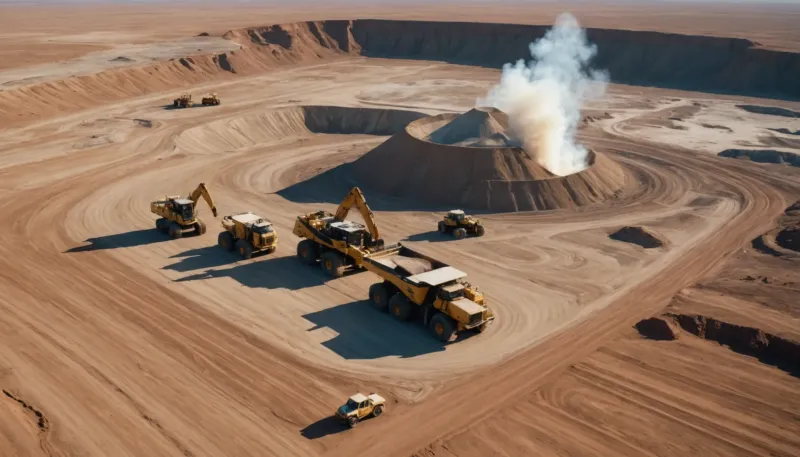
Photo: lithium mine open pit aerial view environmental impact, via towopower.com
There is a disquieting irony embedded in the electric vehicle parked in your driveway. Its battery — the component that makes it cleaner than the combustion engine it replaced — is built from minerals extracted through some of the most environmentally destructive industrial processes on the planet. Lithium, cobalt, nickel, and a constellation of rare earth elements do not simply emerge from the earth ready for use. They are torn from it, often at tremendous cost to surrounding ecosystems, water supplies, and the communities — frequently indigenous — who have lived alongside those landscapes for generations.
As the United States accelerates its clean energy transition, driven by the Inflation Reduction Act's sweeping incentives and an electric vehicle market projected to account for the majority of new car sales by 2035, the demand for these minerals is not merely rising — it is surging. According to the International Energy Agency, a net-zero global economy by 2050 would require roughly six times more mineral inputs than today's energy system. That is not a footnote to the green transition. It is one of its defining challenges.
What the Ground Gives Up
Lithium extraction offers a useful case study in contradiction. In Nevada's Thacker Pass — one of the largest known lithium deposits in North America — a proposed open-pit mine has become a flashpoint between clean energy advocates and environmental groups, as well as members of the Paiute and Shoshone tribes who consider the site sacred. Lithium Nevada, the project's developer, argues that domestic lithium production is essential to reducing dependence on foreign supply chains. Opponents counter that the mine would destroy habitat for sage grouse, threaten regional water tables in an already arid landscape, and desecrate ancestral burial grounds.
The tension is not unique to Nevada. In Chile's Atacama Desert, lithium extraction from brine aquifers has drawn down water reserves in one of the driest places on Earth, threatening fragile ecosystems and the livelihoods of indigenous Atacameño communities who depend on those water systems for agriculture and cultural continuity. The Atacama produces roughly a quarter of the world's lithium supply, and demand projections suggest that pressure will only intensify.
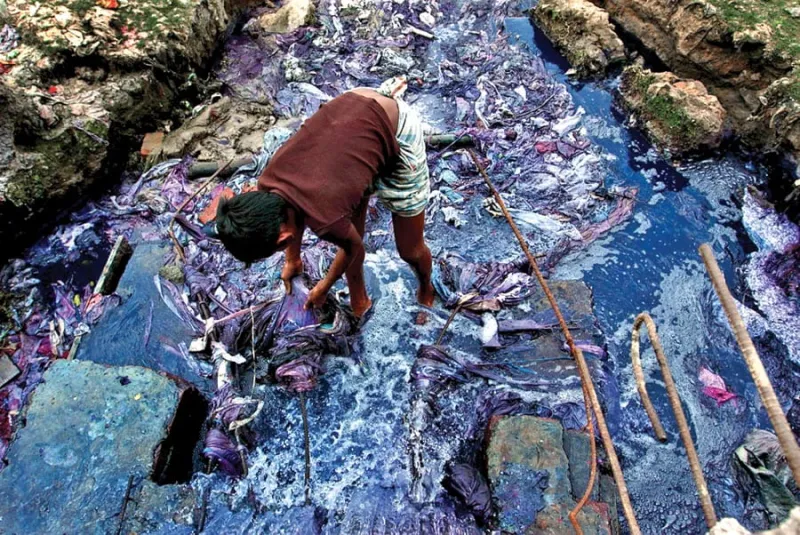
Cobalt presents an even starker picture. Roughly 70 percent of the world's cobalt originates in the Democratic Republic of Congo, where artisanal mining — often carried out with hand tools, without protective equipment, and sometimes by children — remains disturbingly prevalent. American consumers are largely insulated from this reality by layers of supply chain abstraction, but the moral and environmental weight of it is embedded in every EV battery sold in the United States.
The Domestic Mining Dilemma
In response to these supply chain vulnerabilities and ethical concerns, there is a growing bipartisan push in Washington to expand domestic mineral extraction. The logic is straightforward: mining in the United States is subject to stricter environmental regulations than in many producing nations, and domestic production reduces geopolitical dependence on China, which currently dominates rare earth processing.
But domestic expansion carries its own complications. The permitting process for new mines in the U.S. can span a decade or more, a timeline incompatible with the urgency of the energy transition. Efforts to streamline that process, meanwhile, have drawn fierce opposition from environmental advocates who argue that expedited permitting simply accelerates ecosystem destruction with less scrutiny, not more.
There is also the matter of what "stricter regulations" actually means in practice. The General Mining Act of 1872 — yes, still in effect — allows mining companies to extract minerals from federal lands without paying royalties to the public, a subsidy that critics describe as a relic of the frontier era that has no place in a 21st-century resource economy. Reforming that law has proven politically intractable for decades.
Can Recycling Break the Cycle?
The most compelling long-term answer to the extraction dilemma may lie not beneath the ground but in what we have already pulled from it. Closed-loop battery recycling — the process of recovering lithium, cobalt, nickel, and other materials from spent batteries and reintroducing them into new production — has attracted significant investment and policy attention in recent years.
Companies like Redwood Materials, founded by former Tesla CTO JB Straubel and headquartered in Nevada, are building industrial-scale recycling infrastructure capable of recovering more than 95 percent of the critical minerals in lithium-ion batteries. The Department of Energy's ReCell Center, a collaboration among national laboratories and universities, is advancing the science of direct cathode recycling, which preserves battery materials in a form that requires less energy-intensive reprocessing.
The Inflation Reduction Act has further incentivized domestic recycling by counting recycled critical minerals toward the sourcing requirements that qualify EVs for federal tax credits — a policy mechanism that effectively makes recycled content economically competitive with freshly mined material.
But recycling alone cannot solve the problem in the near term. The volume of end-of-life EV batteries available for recycling today is a fraction of what will be needed to supply the battery manufacturing pipeline of the 2030s. The math is unforgiving: recycling can only return what was previously mined, and the installed base of batteries is still too small to sustain a closed loop at scale. For at least the next decade, new extraction will remain unavoidable.
Toward a Less Extractive Future
What would genuinely responsible mineral sourcing look like? Several principles have emerged from research, advocacy, and industry experimentation that point toward a more defensible approach.
Free, prior, and informed consent from indigenous and local communities must be a non-negotiable prerequisite for any extraction project — not a procedural checkbox, but a genuine transfer of decision-making power. Binding benefit-sharing agreements, environmental impact guarantees with real enforcement teeth, and ongoing community oversight are the floor, not the ceiling.
Investment in alternative battery chemistries is equally urgent. Lithium iron phosphate batteries, which use no cobalt and significantly less lithium per unit of storage, are gaining market share rapidly. Sodium-ion batteries, still in early commercial deployment, could eventually sidestep lithium dependency altogether. Every dollar invested in these alternatives reduces the long-term pressure on the mineral supply chain.
Finally, demand reduction deserves more serious attention than it typically receives in mainstream clean energy discourse. A society organized around smaller, lighter vehicles; robust public transit; and denser, walkable communities would require far fewer batteries than one in which every American trades a large gasoline SUV for an equally large electric one. The greenest battery, as the saying goes, is the one you don't need to manufacture.
The Honest Reckoning
The clean energy transition is not a morally uncomplicated project. It is a necessary one — the alternative, continued fossil fuel combustion, carries ecological and human costs that dwarf those of mineral extraction. But necessity does not absolve us of accountability for how we pursue it.
The communities bearing the environmental burden of mineral extraction — in Nevada, in the Atacama, in the Congo — are not abstractions. They are the human face of a supply chain that American consumers and policymakers have been largely content to keep out of sight. Bringing that supply chain into honest view, and demanding that it be reformed rather than simply relocated, is not an obstacle to the green transition. It is what the green transition, at its most serious, actually requires.