Turf Nation: The Thirsty Empire Americans Mow Every Weekend
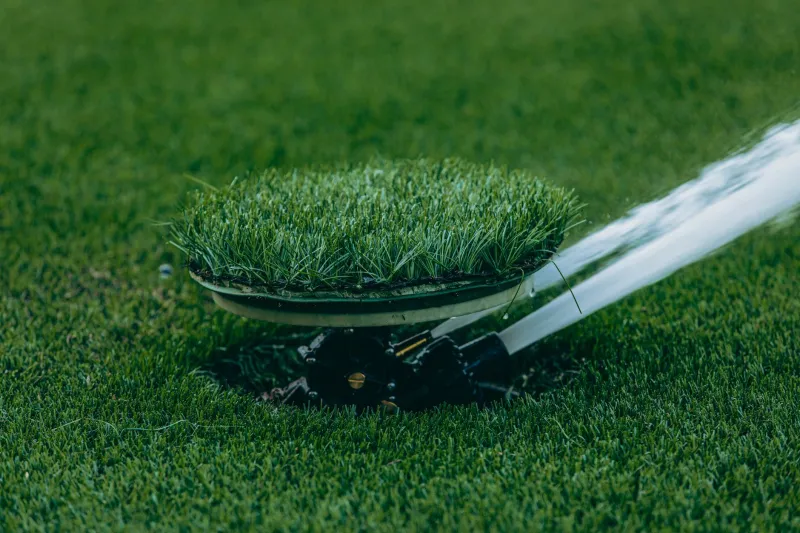
There is a single cultivated crop in the United States that covers roughly 40 million acres—more than the entire cornbelt devotes to corn for irrigation purposes. It produces no food, feeds no livestock, and generates no commodity value. It is grass. Specifically, the ornamental lawn, that closely cropped emerald rectangle surrounding the American home, kept alive through an astonishing allocation of resources that few homeowners ever stop to calculate.
The Arithmetic of the Perfect Yard
The numbers deserve scrutiny. The Environmental Protection Agency estimates that landscape irrigation accounts for nearly one-third of all residential water use in the country—roughly 9 billion gallons per day, with the majority going to lawns. In Phoenix, Las Vegas, and other Sun Belt cities, outdoor watering can push a household's total consumption past 150 gallons per day during summer months, nearly all of it landing on turf that evolved in cooler, wetter climates than the ones it now occupies.
Then there is the chemical subsidy. Americans apply approximately 70 million pounds of pesticides to lawns and gardens annually—rates per acre that frequently exceed what industrial agriculture uses on farmland. Add synthetic fertilizers, whose nitrogen runoff feeds algal blooms in the Gulf of Mexico and the Chesapeake Bay, and the lawn begins to look less like a landscape feature and more like a slow-motion industrial operation disguised as a weekend hobby.
The gas-powered mower completes the picture. Two-stroke engines running for an hour can emit as much smog-forming pollution as a dozen cars over the same period. In aggregate, lawn care equipment burns hundreds of millions of gallons of gasoline each year.
How Turf Conquered the Continent
The lawn's dominance was never inevitable. It is a cultural import—descended from the manicured grounds of English estates—and it was exported to America through a deliberate convergence of postwar policy and marketing. The 1950s suburban boom standardized the front yard as a symbol of civic virtue. Levittown's covenants, early homeowners association rules, and advertising from chemical giants like Monsanto (which promoted a lawn-care regimen in the 1960s with the slogan that weeds were a sign of slovenly citizenship) all fused grass with respectability.
Municipal zoning codes enshrined the pattern. Setback requirements mandated green frontages; many HOAs to this day specify permissible grass heights and can fine residents whose lawns brown during drought. The result is a landscape governed less by ecology than by a mid-century aesthetic that assumed cheap water and boundless growing seasons.
The Rebellion Taking Root
Change is arriving, unevenly but unmistakably. Las Vegas, facing the exhaustion of the Colorado River, has banned ornamental grass in new developments and begun paying residents to strip turf entirely—removing roughly 5,000 acres so far. Southern California water districts offer rebates of several dollars per square foot for lawn removal, and the programs are routinely oversubscribed.
Elsewhere, the transformation is less about bare xeriscaping and more about substitution. In suburban Maryland and Illinois, residents are converting portions of their yards into native prairie patches and pollinator corridors, often over the objections of neighbors and HOA boards. Maryland and Illinois have both passed laws restricting HOAs from banning pollinator-friendly or low-water landscaping—a quiet but significant rebalancing of power between individual homeowners and neighborhood covenants.
The food-forest movement adds another layer. Community groups in Detroit, Atlanta, and Los Angeles are replacing vacant turf with edible perennial landscapes—fruit trees, berry shrubs, and ground covers that require a fraction of the irrigation while producing food in neighborhoods where fresh produce is scarce. These projects treat the yard as productive infrastructure rather than decoration.
The Economics Are Shifting Faster Than the Culture
Water pricing will do what cultural persuasion could not. As western utilities move toward tiered rates that penalize heavy use, the lawn becomes an increasingly expensive luxury. A 2023 analysis by the Pacific Institute found that urban water conservation—lawn conversion chief among the strategies—could save California enough water to supply several million additional households, at lower cost than any new supply project.
Yet the obstacles remain stubborn. Real estate appraisers still reward curb appeal in its traditional form. Contractors lack familiarity with native planting. And for many homeowners, the lawn represents a genuine emotional investment—a canvas of order in an unruly world.
Rethinking Green
None of this argues for gravel and concrete. Poorly designed lawn replacements can worsen heat islands and stormwater runoff. The goal, ecologists emphasize, is not less vegetation but smarter vegetation: deep-rooted natives that sequester carbon, absorb rain, and support insects and birds without irrigation or chemical inputs.
Forty million acres is an enormous canvas. Whether America repaints it with something more resilient may depend less on drought alone than on whether municipalities, HOAs, and homeowners can agree that a yard's worth was never in its uniformity—it was in what it gave back.